-
 +91 98551-63355
 - nagpaljointclinic@gmail.com
+91 98551-63355


.png)


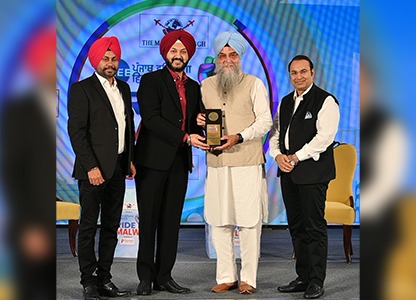
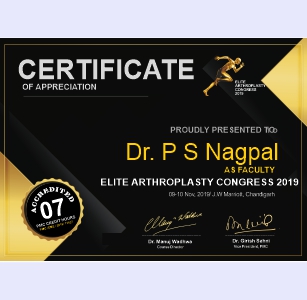
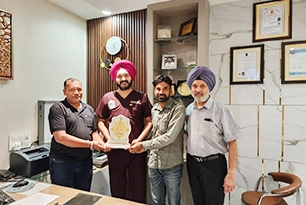
Dr. Parampreet Singh Nagpal is Northern India's first joint surgeon who operate with 2 different joint robots under one roof. One is Cuvis by Maxx Meril(Punjab’s first fully Active Joint Robot) and another one is Cori by Smit & Nephew(Semi Active Joint Robot). Now patients have 6 different implant options to choose from with 2 Robots. Nagpal Hospital's hardworking Orthopedic team has done more than 13000 successful Joint Surgeries.

Robotic surgery at Nagpal Robotics gives you a precisely placed new knee joint. But the rehabilitation that follows surgery is what transforms that joint into a fully functioning, pain-free knee that carries you through daily life. Physiotherapy isn't optional — it is as essential to your success as the surgery itself.
Dr. Parampreet Singh Nagpal says it clearly to every patient: "My job is to place the perfect joint. Your job — with your physiotherapist's guidance — is to teach that joint to work again. You both need to do your part."
This guide covers exactly what physiotherapy involves at each stage after knee replacement surgery.
After surgery, the muscles around your knee are weakened from both the operation and months (often years) of disuse due to pain. The new implant is mechanically perfect — but the muscles, tendons, and ligaments around it need retraining to coordinate properly. Without physiotherapy:
With consistent physiotherapy, the vast majority of patients achieve full functional independence and optimal range of motion within 3–6 months.
After discharge, physiotherapy continues at home. The Nagpal Robotics physiotherapy team provides a written home exercise programme. Exercises should be done twice daily — morning and evening.
Range of motion progresses faster with consistent physiotherapy. Robotic surgery patients typically achieve these milestones 1–2 weeks ahead of conventional surgery patients due to better initial alignment and less tissue trauma.
By this stage, most patients at Nagpal Robotics are largely independent and active. The focus shifts from basic recovery to optimising strength, balance, and confidence:
Q: Can I do physiotherapy at home, or do I need to go to a clinic?
A: For the first 4–6 weeks, most exercises can be done at home with the programme provided by Nagpal Robotics. A physiotherapy clinic visit is recommended 2–3 times per week if possible. Nagpal Robotics can arrange home physiotherapy visits in Bathinda for patients who cannot travel.
Q: My knee is swollen after exercises. Is that normal?
A: Yes — mild swelling after physiotherapy is normal and expected for the first 4–6 weeks. Apply ice for 15–20 minutes after exercise sessions. If swelling is severe, very painful, or accompanied by fever, contact Nagpal Robotics immediately.
Q: What if I miss 2–3 weeks of physiotherapy due to illness?
A: Resume as soon as you're able and inform Dr. Nagpal's team. Gaps in physiotherapy are manageable — the key is to resume consistently. Don't try to "catch up" quickly; return to the exercise level you were at before the gap and rebuild from there.
Dr. Parampreet Singh Nagpal and the Nagpal Robotics team guide you through every stage — from surgery to full recovery. Punjab's most comprehensive robotic knee replacement programme.
Book Consultation +91 98551-63355Powered by Nagpal Robotics @2026
Created With ❤️ By Digital Dots