 +91 98551-63355


.png)








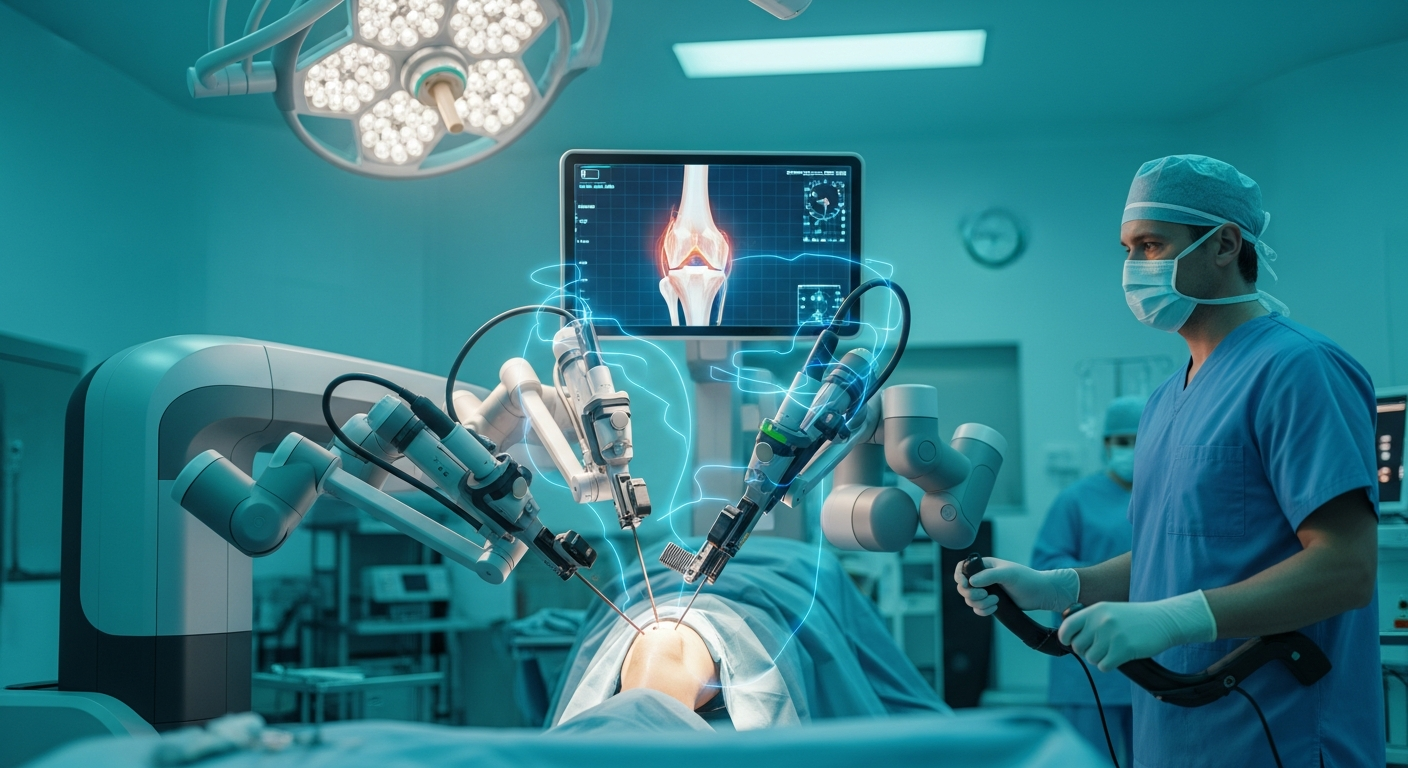
Total Knee Replacement Surgery in Punjab – Robotic TKR at Nagpal Robotics, Bathinda
Total knee replacement surgery — also called total knee arthroplasty or TKR — is one of the most commonly performed and most successful orthopedic procedures in the world. When the entire knee joint is severely damaged by arthritis, injury, or disease, total knee replacement restores pain-free movement by replacing all damaged surfaces with precision-crafted artificial implants.
At Nagpal Robotics in Bathinda, Dr. Parampreet Singh Nagpal performs robotic-assisted total knee replacement surgery with outcomes that consistently exceed national and international benchmarks. With over 3,000 successful procedures completed, his centre is the most trusted destination for TKR in Punjab.
What is Total Knee Replacement Surgery?
Total knee replacement surgery involves resurfacing three compartments of the knee joint: the medial (inner), lateral (outer), and patellofemoral (kneecap) compartments. The damaged bone and cartilage are removed and replaced with metal and plastic components that recreate the smooth gliding surface of a healthy knee.
The procedure is indicated when:
- Arthritis has damaged the entire knee joint (Grade 3 or 4 osteoarthritis)
- Rheumatoid arthritis has destroyed multiple compartments
- Severe bone damage due to trauma or avascular necrosis
- Significant deformity of the knee (varus/valgus deformity)
- All conservative treatments have failed to provide lasting relief
Robotic vs Traditional Total Knee Replacement
While traditional total knee replacement has excellent long-term outcomes, robotic-assisted TKR at Nagpal Robotics takes surgical precision to the next level:
- 3D Pre-Planning: CT scan data creates a personalized surgical plan before entering the operating room
- Real-time Guidance: The robotic system provides haptic feedback and real-time corrections during surgery
- Soft Tissue Balance: Robotic systems enable precise soft tissue tension measurement, improving long-term function
- Better Alignment: Implant positioning is verified in real time, reducing misalignment — the most common cause of poor outcomes
- Less Blood Loss: More precise cuts mean less damage to surrounding vessels
The Total Knee Replacement Procedure – Step by Step
- Consultation and Diagnosis: Clinical examination, X-rays, and patient history are evaluated to determine the severity of knee damage and surgical readiness.
- Pre-Surgical Planning: CT scan data is uploaded to the robotic system, which creates a 3D model of your knee. The surgeon plans every cut, implant size, and alignment in advance.
- Anaesthesia: The procedure is performed under spinal or general anaesthesia, ensuring complete comfort during surgery.
- Bone Preparation: The damaged bone surfaces are removed with robotic-guided cuts that follow the pre-planned template precisely.
- Implant Placement: The metal and plastic components are positioned and secured. Alignment and balance are verified with the robotic system before closing.
- Wound Closure: The incision is closed in layers, and a drain may be placed temporarily to prevent fluid accumulation.
- Recovery Begins: Within 24 hours, physiotherapy starts — helping the patient stand and take first steps with support.
Components Used in Total Knee Replacement
A total knee replacement implant system consists of four main components:
- Femoral component: Metal cap covering the lower end of the thighbone (femur)
- Tibial component: Metal platform on the upper end of the shinbone (tibia)
- Tibial insert: High-density polyethylene (plastic) spacer between metal components
- Patellar component: Plastic button replacing the back of the kneecap (used in selected cases)
The implant material (cobalt-chromium, titanium, or ceramic) and design (standard, high-flexion, revision) are chosen based on each patient's anatomy, weight, activity level, and age.
Recovery Timeline After Total Knee Replacement
- Day 1–2: Walking begins with a walker; physiotherapy exercises commence
- Day 3–5: Discharge from hospital with detailed home care instructions
- Week 2: Suture removal; continued physiotherapy
- Week 4–6: Walking without aids; driving may resume
- Month 3: Return to most daily activities; stair climbing is comfortable
- Month 6–12: Maximum recovery achieved; implant feels natural
Life After Total Knee Replacement – What Can You Expect?
The vast majority of total knee replacement patients report dramatically improved quality of life. Studies show that over 90% of patients have satisfactory outcomes at 10–15 years after TKR. Activities that become possible after successful recovery include:
- Walking long distances without pain
- Climbing stairs normally
- Swimming and cycling (recommended low-impact exercises)
- Traveling and socializing freely
- Sleeping comfortably without knee pain
Total Knee Replacement Cost in Punjab
At Nagpal Robotics in Bathinda, total knee replacement surgery is available at significantly lower costs than metro hospitals, with no compromise on technology or care quality:
- Robotic TKR (single knee): ₹2.5 lakh – ₹4.5 lakh
- Traditional TKR (single knee): ₹1.5 lakh – ₹2.5 lakh
- Bilateral TKR (both knees): ₹4.5 lakh – ₹8 lakh
Insurance coverage is available, and the team assists with pre-authorization and claim documentation.
Frequently Asked Questions
Q. How long does a total knee replacement implant last?
Modern TKR implants are designed to last 15–25 years. Active lifestyle, maintaining healthy weight, and following post-operative guidelines extend implant longevity.
Q. Is total knee replacement a major surgery?
Yes, TKR is a major surgical procedure requiring general or spinal anaesthesia. However, with modern techniques and robotic assistance, it is very safe and well-tolerated even in elderly patients.
Q. What is the difference between total and partial knee replacement?
Total knee replacement replaces all three compartments of the knee. Partial (unicompartmental) replacement addresses only the damaged compartment, preserving healthy bone and tissue. The choice depends on the extent and location of arthritis.
Q. Can both knees be replaced at the same time?
Yes, simultaneous bilateral TKR is performed in selected patients. Dr. Nagpal evaluates cardiac health and overall fitness before recommending this approach.
Book Your Total Knee Replacement Consultation
Advanced robotic TKR – Nagpal Robotics, Bathinda, Punjab
Call: +91 98551-63355 Book Appointment