 +91 98551-63355


.png)






Knee Replacement Operation in Punjab – A Complete Step-by-Step Guide
A knee replacement operation is one of the most life-changing surgical procedures available for patients suffering from severe knee pain caused by arthritis, injury, or joint degeneration. At Nagpal Robotics in Bathinda, Punjab, Dr. Parampreet Singh Nagpal has pioneered robotic-assisted knee replacement operations that deliver superior accuracy, faster recovery, and excellent long-term results. With over 3,000 successful surgeries and a 98% patient satisfaction rate, Nagpal Robotics is Punjab's most trusted centre for knee replacement operations.
If you or a loved one is considering a knee replacement operation, this comprehensive guide will walk you through everything — from what the operation involves, to how to prepare, what happens during surgery, and how to recover successfully.
What is a Knee Replacement Operation?
A knee replacement operation — medically termed knee arthroplasty — is a surgical procedure that removes the damaged cartilage and bone surfaces of the knee joint and replaces them with artificial components made from high-grade metal alloys, polyethylene plastic, and ceramic materials. These implants recreate the smooth, painless gliding motion of a healthy knee joint.
The knee replacement operation does not remove the entire knee. The underlying bones — the femur (thigh bone) and tibia (shin bone) — are preserved and resurfaced. The muscles, tendons, and ligaments surrounding the knee are largely maintained, especially with modern robotic surgical techniques.
Knee replacement operations are performed for patients with:
- Severe osteoarthritis causing bone-on-bone grinding
- Rheumatoid arthritis causing chronic joint inflammation and destruction
- Post-traumatic arthritis following knee injuries
- Failed non-surgical treatments including medications, injections, and physiotherapy
- Significant deformity of the knee joint affecting alignment
Types of Knee Replacement Operations
Total Knee Replacement Operation
The most common type, a total knee replacement operation resurfaces all three compartments of the knee — medial (inner), lateral (outer), and patellofemoral (kneecap). It is recommended for advanced arthritis affecting the entire knee joint.
Partial Knee Replacement Operation
When arthritis is confined to a single compartment of the knee, a partial knee replacement operation resurfaces only that section. It preserves more natural bone and ligaments, offers faster recovery, and feels more natural. Dr. Nagpal uses robotic technology to perform highly accurate partial replacements.
Bilateral Knee Replacement Operation
For patients with severe arthritis in both knees, a bilateral knee replacement operation replaces both knees simultaneously. This approach reduces total hospital time and rehabilitation period compared to two separate operations.
Revision Knee Replacement Operation
Performed when a previous knee replacement has failed or worn out, a revision operation is more complex and requires the expertise of an experienced surgeon like Dr. Nagpal.
How Robotic Technology Transforms the Knee Replacement Operation
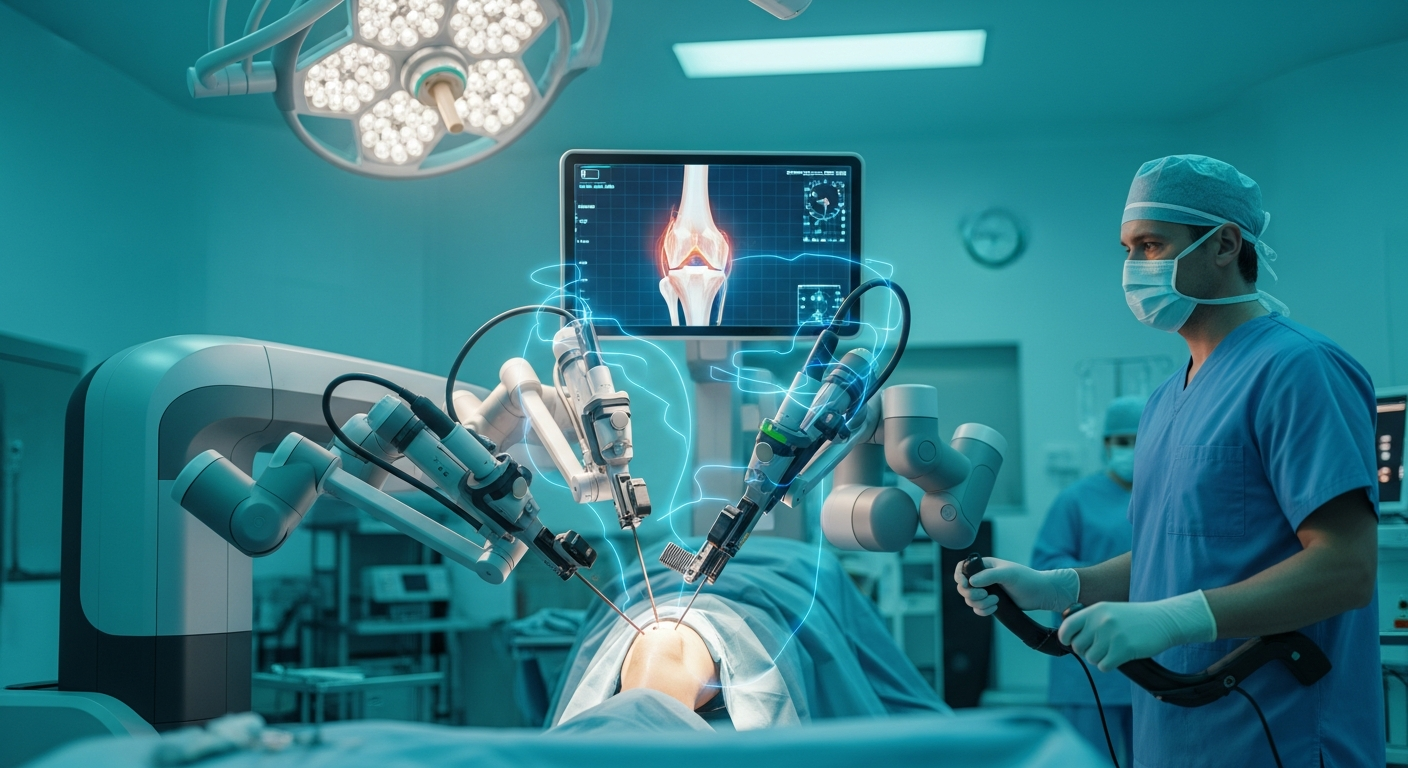
Nagpal Robotics is home to Punjab's first fully active CUVIS robot (installed February 2023) and the CORI handheld robotic system by Smith & Nephew. These advanced systems transform the knee replacement operation in the following ways:
- Pre-operative 3D Planning: CT scans generate a precise digital model of the patient's knee, allowing Dr. Nagpal to plan the exact implant size, position, and angle before entering the operating room.
- Real-Time Navigation: During the operation, the robot provides continuous real-time feedback, ensuring every bone cut is within 0.5mm of the planned position.
- Soft Tissue Preservation: Robotic precision means less trauma to surrounding muscles, ligaments, and tendons — resulting in less post-operative pain and faster recovery.
- Perfect Implant Alignment: Optimal component alignment reduces implant wear, improves range of motion, and extends the life of the replacement to 20–25 years or more.
- Reproducible Results: Robotic systems eliminate human variability, ensuring consistent, high-quality outcomes for every patient.
Step-by-Step: What Happens During the Knee Replacement Operation?
Step 1: Anaesthesia Administration
The operation begins with the administration of spinal or general anaesthesia. Most patients at Nagpal Robotics receive spinal anaesthesia, which numbs the body from the waist down. This approach has fewer risks than general anaesthesia and allows the patient to remain comfortable throughout.
Step 2: Incision and Exposure
A carefully planned incision is made over the front of the knee, typically 15–20 cm in length (shorter with minimally invasive techniques). The surgeon gently moves the kneecap aside to expose the knee joint surfaces.
Step 3: Robotic Bone Preparation
Using the robotic system, the damaged cartilage and bone from the femur and tibia are precisely removed. The robot guides cutting instruments within pre-defined boundaries, preventing accidental damage to healthy bone and tissue.
Step 4: Implant Placement and Testing
Trial implants are inserted to test joint mechanics — checking that the knee bends, straightens, and tracks correctly. The robotic system confirms that alignment, balance, and motion are optimal before the final implants are permanently fixed.
Step 5: Final Implant Fixation
The permanent metal and plastic components are cemented or press-fit into position. The kneecap surface may also be resurfaced. The joint is thoroughly irrigated, and the incision is closed in layers.
Step 6: Recovery Room
Patients are transferred to the recovery room where vital signs are monitored closely. Most patients are alert and comfortable within 1–2 hours. Physiotherapy begins the same day or the following morning.
Preparing for Your Knee Replacement Operation
Preparation is critical for a smooth operation and fast recovery. Dr. Nagpal's team at Nagpal Robotics provides personalised pre-operative guidance including:
- Pre-operative blood tests, ECG, and medical clearance
- Stopping blood-thinning medications as advised
- Strengthening exercises for the quadriceps and hamstring muscles
- Weight management to reduce surgical risk
- Arranging home support for the post-operative period
- Planning home modifications (grab rails, raised toilet seats)
Recovery After Knee Replacement Operation
Recovery at Nagpal Robotics is guided by experienced physiotherapists who develop a personalised rehabilitation programme for every patient. Here is what to expect:
- Day 1–2: Walking with a walker begins, swelling is managed with ice and elevation
- Days 3–5: Hospital discharge, stairs practice, continued physiotherapy
- Weeks 2–6: Gradual increase in walking distance, light daily activities
- Weeks 6–12: Driving (when cleared), return to desk work, swimming
- Months 3–6: Full recovery with excellent knee function for most patients
Why Choose Nagpal Robotics for Your Knee Replacement Operation?
- Punjab's first fully active CUVIS robotic system since February 2023
- Over 1,500 successful knee replacement operations
- 98% patient satisfaction rate across Punjab, Haryana, Rajasthan
- Dr. Parampreet Singh Nagpal — winner of Bharat Ki Shaan Award and Shaan India Award
- Comprehensive pre-operative planning with 3D CT-based digital models
- Expert physiotherapy team for rapid post-operative rehabilitation
- Affordable, transparent pricing with zero hidden costs
- Patients served from across Punjab, Haryana, Rajasthan, and beyond
Ready for Your Knee Replacement Operation?
Consult Dr. Parampreet Singh Nagpal at Nagpal Robotics, Bathinda — Punjab's #1 robotic knee replacement centre.
Call Now: +91 98551-63355 Book AppointmentFrequently Asked Questions About Knee Replacement Operation
How long does a knee replacement operation take?
A robotic knee replacement operation at Nagpal Robotics typically takes 60–90 minutes. Total hospital stay including preparation and recovery is about 3–5 days.
Is knee replacement operation painful?
The operation is performed under anaesthesia, so there is no pain during the procedure. Post-operative pain is managed effectively with medications and is well-controlled within days.
What is the success rate of knee replacement operation?
At Nagpal Robotics Bathinda, the success rate exceeds 98%, with patients achieving significant pain relief and restored mobility.
Can I walk after knee replacement operation?
Yes, most patients begin walking with support within 24 hours of the operation at Nagpal Robotics.
Who is the best surgeon for knee replacement operation in Punjab?
Dr. Parampreet Singh Nagpal at Nagpal Robotics, Bathinda is Punjab's leading surgeon for robotic knee replacement operations with over 3,000 successful cases.