 +91 98551-63355


.png)





Advanced Knee Replacement Surgery in Punjab – The Most Sophisticated Technology Available
The field of knee replacement surgery has undergone a remarkable transformation in the last decade. What was once a procedure relying entirely on surgeon skill and basic mechanical tools is now supported by artificial intelligence, 3D imaging, real-time robotics, and computer-assisted planning. At Nagpal Robotics in Bathinda, Punjab, Dr. Parampreet Singh Nagpal brings this entire spectrum of advanced knee replacement technology to patients across Punjab and North India.
Whether you have been told you need a knee replacement and want the most advanced option available, or you are researching whether better alternatives to traditional surgery exist — this guide explains exactly what advanced knee replacement surgery involves and why it delivers superior outcomes.
What is Advanced Knee Replacement?
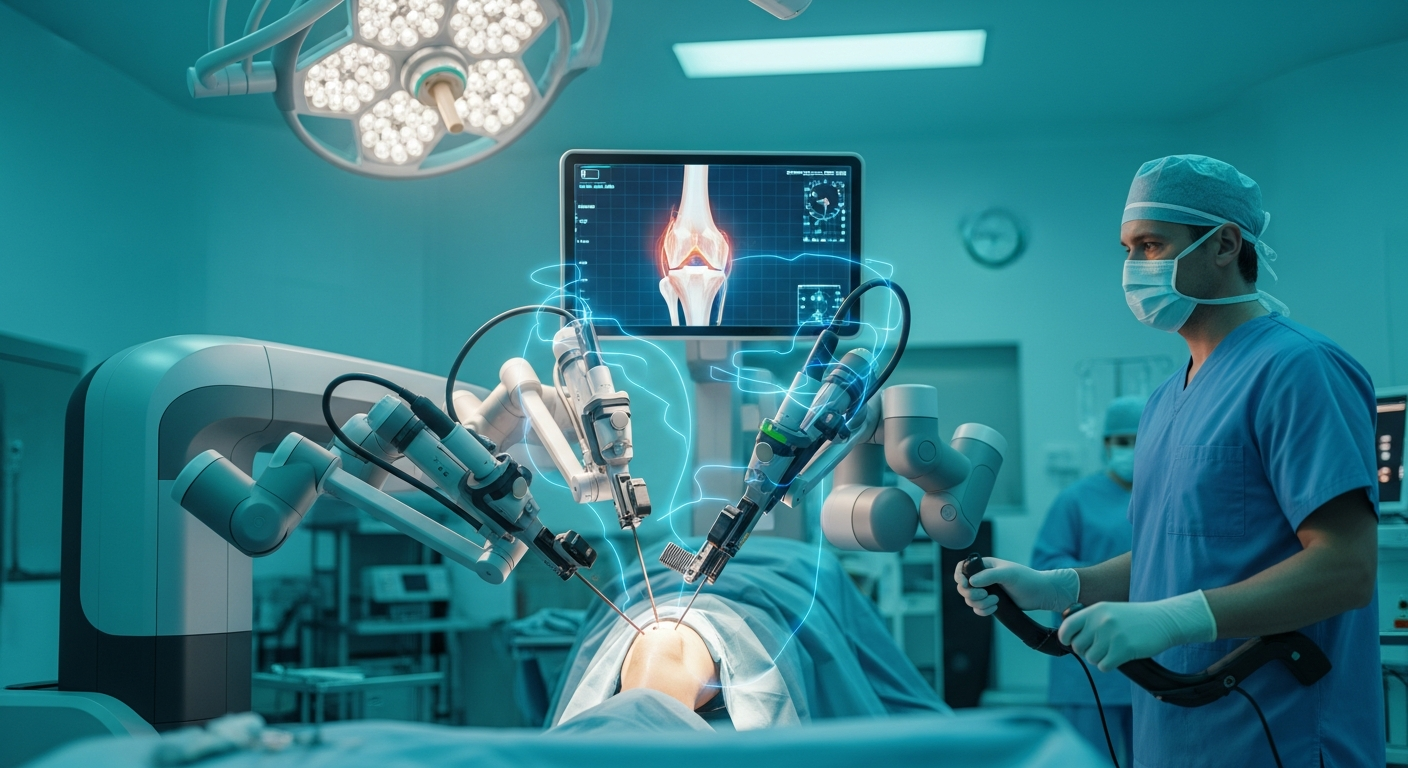
Advanced knee replacement refers to total or partial knee replacement performed using next-generation technologies that go beyond traditional manual surgical techniques. These technologies include:
- AI-powered robotic surgical systems
- 3D CT-based pre-operative surgical planning
- Real-time haptic feedback during surgery
- Computer navigation for implant positioning verification
- Advanced implant materials with improved wear resistance
- Minimally invasive surgical approaches
Advanced Robotic Systems at Nagpal Robotics
CUVIS Joint – Fully Active Robotic System
The CUVIS Joint is a fully active robotic system — meaning the robotic arm autonomously performs cuts based on the pre-planned 3D surgical map, with the surgeon supervising and guiding. This represents the highest level of robotic precision available in knee surgery. Punjab's first CUVIS system was installed at Nagpal Robotics in 2023.
CORI Surgical System – Handheld Robotic Technology
The CORI system by Smith & Nephew is a handheld robotic device that provides real-time bone surface mapping without requiring a pre-operative CT scan. It uses intraoperative data to create a 3D model of the patient's knee during surgery, providing haptic boundaries that prevent the surgeon from operating outside the planned zone.
How Advanced Technology Improves Knee Replacement Outcomes
1. Pre-Operative 3D Planning
Before entering the operating room, the robotic system creates a detailed 3D model of your knee using CT scan data. Every cut, implant size, and alignment angle is planned virtually. This personalized approach is impossible with traditional techniques where the surgeon measures angles manually during surgery.
2. Sub-Millimetre Surgical Precision
Traditional knee replacement accepts a margin of error of 2–3 degrees in implant alignment. Robotic systems at Nagpal Robotics achieve alignment accuracy within 1 degree. This precision directly translates to better long-term function and implant longevity.
3. Soft Tissue Balancing
Advanced robotic systems measure the tension in the ligaments surrounding the knee in real time during surgery. This data allows the surgeon to adjust implant positioning for optimal soft tissue balance — a critical factor in natural knee feel and long-term satisfaction.
4. Intraoperative Verification
Before the wound is closed, the robotic system verifies that the implant is positioned exactly as planned. If any deviation is detected, it is corrected before surgery ends — something not possible with traditional methods.
Advanced Implant Materials and Design
The advancement in knee replacement is not limited to surgical technique. Modern implants used at Nagpal Robotics incorporate:
- Oxidized Zirconium: A ceramic-like material that is harder and more wear-resistant than cobalt-chromium
- Highly cross-linked polyethylene: Advanced plastic bearing surfaces with dramatically improved wear resistance
- High-flexion designs: Implants designed to allow 130–150 degrees of knee bending for patients who need to sit cross-legged or squat
- Gender-specific implants: Designed to match the different anatomy of the female knee for improved fit and comfort
- Cementless fixation: Implants that integrate directly with bone through biological ingrowth for longer-lasting fixation
Advanced Anaesthesia and Pain Management
Advanced knee replacement at Nagpal Robotics also encompasses modern anaesthesia protocols designed to minimize pain and accelerate recovery:
- Spinal anaesthesia with sedation (instead of general anaesthesia) reduces recovery time
- Periarticular injection of pain medication during surgery reduces post-operative pain dramatically
- Multimodal pain management reduces the need for strong opioid painkillers
- Regional nerve blocks provide targeted pain relief for hours after surgery
Advanced Rehabilitation Protocol
Recovery after advanced knee replacement begins within 24 hours of surgery. The Nagpal Robotics physiotherapy protocol is structured around evidence-based progressive rehabilitation that gets patients mobile faster and safer than traditional programs.
Who Should Choose Advanced Robotic Knee Replacement?
Advanced robotic knee replacement is recommended for virtually all patients requiring knee replacement surgery. It is particularly beneficial for:
- Patients with complex knee deformities requiring precise correction
- Active patients who want the best possible long-term function
- Patients who want faster recovery and less post-operative pain
- Patients with one knee already replaced who want optimal results for the second
- Younger patients who will place higher demands on the implant over decades
Frequently Asked Questions
Q. What is the most advanced knee replacement technology in Punjab?
Nagpal Robotics in Bathinda operates both CUVIS (fully active robot) and CORI (handheld robotic system) — the most advanced robotic knee replacement technology available in Punjab and North India.
Q. Is advanced robotic knee replacement worth the additional cost?
Yes, for most patients. Better alignment, lower revision rates, faster recovery, and improved long-term function make the modest additional cost of robotic surgery a sound investment in your health and mobility.
Q. Does advanced technology mean longer surgery time?
Not necessarily. Experienced robotic surgeons like Dr. Nagpal perform robotic-assisted knee replacement in 60–90 minutes — similar to traditional surgery — because pre-operative planning makes the intraoperative steps highly efficient.
Experience the Most Advanced Knee Replacement in Punjab
Dual robotic systems – CUVIS + CORI – Nagpal Robotics, Bathinda
Call: +91 98551-63355 Book Appointment