 +91 98551-63355


.png)


Knee Replacement for Sports Injuries – Expert Robotic Care at Nagpal Robotics Punjab
Sports injuries to the knee are among the most common injuries in active individuals across Punjab. Whether from kabaddi, wrestling, football, cricket, or road accidents — knee injuries can cause damage that, over years, progresses to disabling post-traumatic arthritis. When this happens, knee replacement surgery becomes the most effective long-term solution. At Nagpal Robotics in Bathinda, Dr. Parampreet Singh Nagpal provides expert robotic knee replacement for patients with sports injury-related knee damage — often at a younger age than typical arthritis patients, requiring specialised expertise.
How Sports Injuries Lead to Knee Replacement
Not all sports knee injuries require immediate replacement. However, specific injuries and patterns significantly increase the risk of developing arthritis that eventually requires replacement:
ACL (Anterior Cruciate Ligament) Tears
ACL tears are among the most common serious sports knee injuries. Even with surgical reconstruction, ACL-injured knees have a significantly elevated risk of developing osteoarthritis within 10–20 years. The altered joint biomechanics following injury accelerate cartilage breakdown.
Meniscus Tears and Meniscectomy
The meniscus acts as a shock absorber in the knee. Tears that require partial or total meniscectomy (meniscus removal) leave the cartilage unprotected and vulnerable to rapid wear — significantly increasing arthritis risk.
Tibial Plateau Fractures
Fractures of the top of the tibia (shin bone) damage the joint surface. Even after excellent surgical fixation, the irregular joint surface eventually causes accelerated cartilage wear and arthritis.
Patellar (Kneecap) Fractures and Dislocations
Damage to the kneecap and its joint surface can lead to patellofemoral arthritis requiring surgery.
Multiple Ligament Injuries
Complex injuries involving multiple ligaments cause chronic knee instability, uneven joint loading, and accelerated cartilage breakdown.
Post-Traumatic Arthritis: The Connection Between Sports Injury and Knee Replacement
Post-traumatic arthritis develops when previous knee trauma disrupts the normal mechanics of the joint. The articular cartilage — which covers the bone ends in the knee — gradually wears away due to abnormal loading patterns. Once the cartilage is gone, bone-on-bone contact causes severe pain, stiffness, and disability.
Post-traumatic arthritis typically develops 10–20 years after the original injury. This means many patients requiring knee replacement for sports injuries are in their 40s, 50s, or 60s — younger than the typical osteoarthritis patient. This has important implications for implant selection and surgical technique.
Robotic Knee Replacement for Sports Injury Patients at Nagpal Robotics
Patients with post-traumatic arthritis from sports injuries often present unique surgical challenges:
- Previous surgical hardware (screws, plates) that may need to be removed
- Altered bone anatomy from previous fractures
- Ligament deficiency from previous injuries affecting implant selection
- Younger age requiring longer implant lifespan
- Higher functional demands — more active lifestyle expected post-surgery
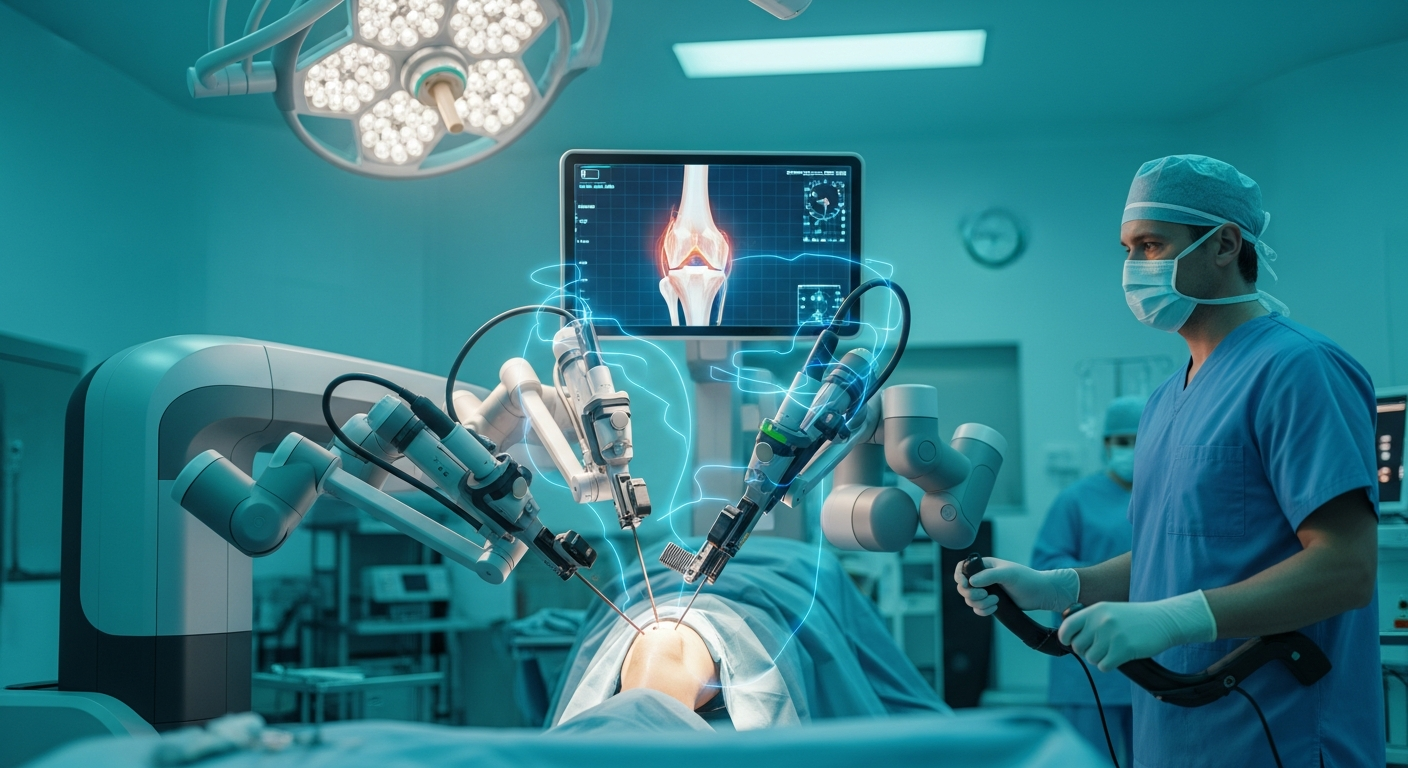
Robotic knee replacement at Nagpal Robotics is particularly valuable for these complex cases because:
- 3D CT-based planning accounts for altered bone anatomy from previous injuries
- Robotic precision achieves optimal alignment even in anatomically altered knees
- Advanced implant systems available including constrained implants for ligament-deficient knees
- Dr. Nagpal's extensive revision and complex case experience
Partial vs Total Knee Replacement for Sports Injuries
For younger, active sports injury patients where arthritis is confined to a single compartment, Dr. Nagpal may recommend partial knee replacement as the first-line surgical option. Benefits for sports patients include:
- Preservation of healthy bone and ligaments for future revision if needed
- More natural knee feel — important for active individuals
- Faster recovery — back to activities sooner
- Convertible to total replacement if arthritis progresses
For patients with widespread joint damage across multiple compartments, total knee replacement provides the most reliable, permanent solution.
Return to Activity After Knee Replacement for Sports Patients
After full recovery from knee replacement at Nagpal Robotics, sports injury patients can typically enjoy:
- Walking, hiking, and trekking
- Swimming and water aerobics
- Cycling (stationary and road)
- Golf
- Doubles tennis
- Light recreational activities
High-impact activities — running, jumping, contact sports — are generally discouraged to protect implant longevity. Dr. Nagpal discusses activity goals with each patient individually.
Sports Injury Causing Knee Pain? Get Expert Help
Consult Dr. Parampreet Singh Nagpal at Nagpal Robotics, Bathinda for specialised sports injury knee care.
Call: +91 98551-63355 Book AppointmentFrequently Asked Questions
Can sports injuries lead to knee replacement?
Yes. ACL tears, meniscus tears, and knee fractures can cause post-traumatic arthritis over time. When severe, robotic knee replacement at Nagpal Robotics provides excellent long-term results.
Is knee replacement suitable for younger patients with sports injuries?
Yes. Dr. Nagpal may recommend partial knee replacement or other joint-preserving options first for younger patients, with total replacement when needed.
What sports can I do after knee replacement surgery?
After full recovery: walking, cycling, swimming, golf, doubles tennis. High-impact sports should be avoided to protect implant longevity.