-
 +91 98551-63355
 - nagpaljointclinic@gmail.com
+91 98551-63355


.png)


Dr. Parampreet Singh Nagpal is Northern India's first joint surgeon who operate with 2 different joint robots under one roof. One is Cuvis by Maxx Meril(Punjab’s first fully Active Joint Robot) and another one is Cori by Smit & Nephew(Semi Active Joint Robot). Now patients have 6 different implant options to choose from with 2 Robots. Nagpal Hospital's hardworking Orthopedic team has done more than 13000 successful Joint Surgeries.
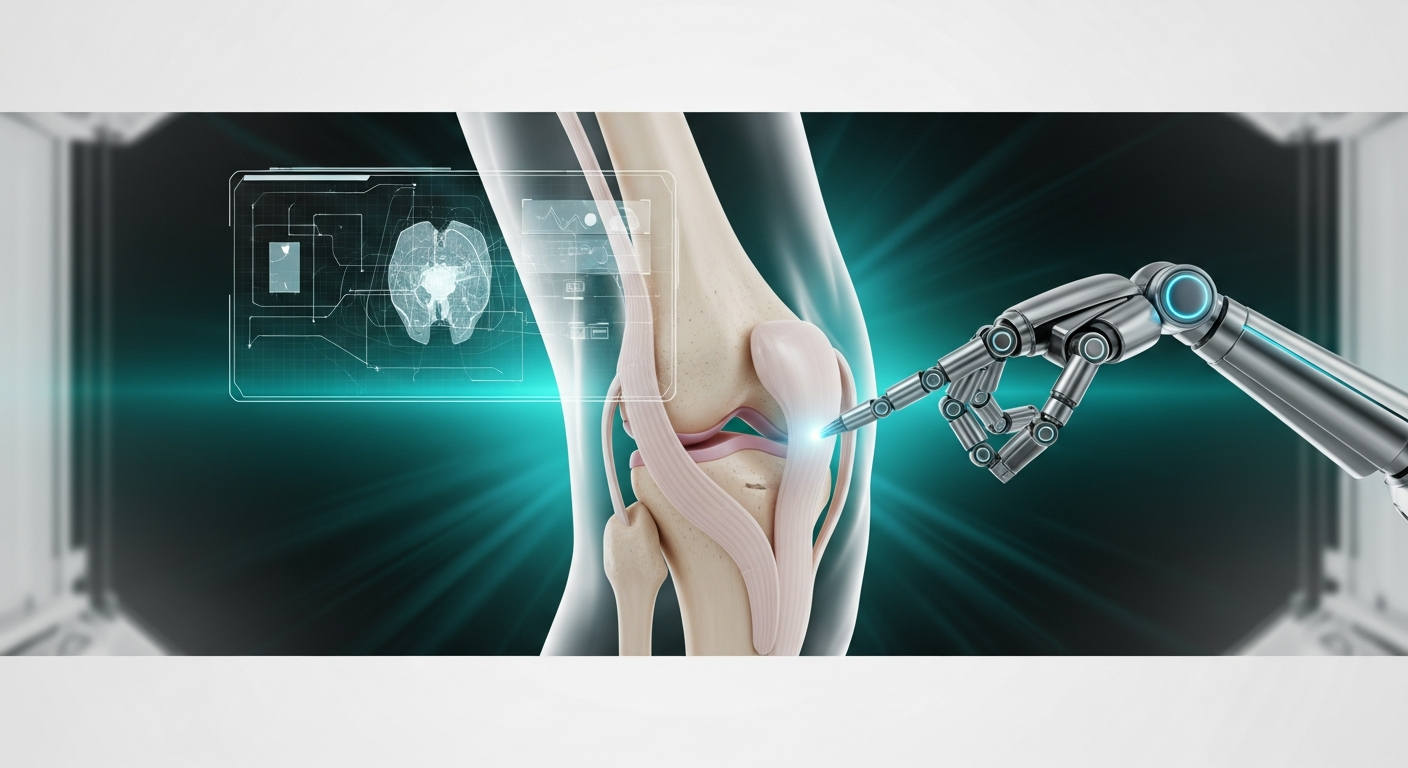
One of the most common questions patients ask when they visit Nagpal Robotics in Bathinda is this: "Doctor, should I get a full knee replacement or will resurfacing work for me?" It's a fair question — and the answer depends entirely on the condition of your knee and which parts are actually damaged.
In this article, Dr. Parampreet Singh Nagpal — Punjab's leading robotic knee replacement surgeon — explains both procedures clearly, so you can understand what's right for your specific situation before your consultation.
Knee resurfacing, medically called unicompartmental knee arthroplasty (UKA) or partial knee replacement, involves removing and replacing only the damaged compartment of the knee — not the entire joint. The knee has three compartments: the medial (inner), lateral (outer), and patellofemoral (kneecap area).
If only one compartment is severely arthritic while the others remain relatively healthy, resurfacing that single compartment is a less invasive and bone-preserving option. The healthy ligaments and cartilage in the untouched compartments remain intact, giving the knee a more natural feel after surgery.
Total knee replacement (TKR), also known as total knee arthroplasty, involves removing damaged cartilage and bone from all three compartments of the knee and replacing them with metal and plastic implants. This is the more commonly performed procedure when arthritis has spread across the entire knee joint.
At Nagpal Robotics, both procedures are performed using advanced robotic systems — the CUVIS and CORI robots — ensuring millimeter-perfect precision regardless of which surgery you need.
| Feature | Knee Resurfacing (Partial) | Total Knee Replacement |
|---|---|---|
| Bone removed | Minimal – only damaged area | All three compartments |
| Suitable for | Single-compartment arthritis | Widespread / whole knee arthritis |
| Recovery time | 4–6 weeks | 2–3 months |
| Hospital stay | 2–3 days | 3–5 days |
| Natural feel | More natural (ligaments preserved) | Excellent with robotic alignment |
| Longevity | 15–20 years | 20–25 years |
| Revision risk | Slightly higher long-term | Lower |
| Cost | Slightly lower | Standard range |
You may be a good candidate for knee resurfacing (partial replacement) if:
Total knee replacement is usually the better option when:
In the past, surgeons had to rely entirely on manual tools and their own eye to perform knee resurfacing — which is why results were inconsistent. At Nagpal Robotics Bathinda, robotic assistance means:
This precision is why patients who come to Nagpal Robotics from cities like Amritsar, Ludhiana, Patiala, and even Delhi get such consistent, positive outcomes — regardless of whether they have partial or total knee replacement.
When you visit Dr. Nagpal for the first time, here's what happens:
The entire decision is made based on what's best for you — not a standard recommendation applied to every patient.
Gurjeet Singh, 52, a farmer from Mansa district, came to Nagpal Robotics with severe pain in the inner side of his left knee. His X-rays showed Grade 3 medial compartment osteoarthritis with the lateral compartment still intact. "I was worried I'd need a full replacement," he shared. "Dr. Nagpal explained that only the inner part of my knee was damaged and I'd be fine with partial resurfacing using the robot."
Three months later, Gurjeet was back working on his farm — with minimal scar tissue, preserved natural ligaments, and a knee that felt far more natural than he expected. This is the kind of personalised outcome that robotic precision makes possible.
The cost of knee resurfacing (partial replacement) in Punjab typically ranges from ₹1.8 to ₹3 lakh per knee, while total knee replacement costs ₹2.5 to ₹4.5 lakh per knee. Both procedures are covered under most health insurance policies, and Nagpal Robotics has cashless tie-ups with major insurers.
Q: Can a partial knee resurfacing be converted to a total replacement later?
A: Yes. If the partial resurfacing eventually wears out or arthritis progresses to other compartments, it can be revised to a total knee replacement. Robotic bone preservation during partial surgery makes this future conversion easier.
Q: Is resurfacing surgery less painful than total replacement?
A: Generally yes — because less bone is removed and more soft tissue is preserved. Most partial resurfacing patients report significantly less post-operative discomfort.
Q: How do I know which procedure I need?
A: A weight-bearing knee X-ray and clinical examination by an experienced orthopaedic surgeon is the standard way to determine this. At Nagpal Robotics, Dr. Nagpal evaluates every patient individually to recommend the most appropriate procedure.
Book a consultation with Dr. Parampreet Singh Nagpal at Nagpal Robotics Bathinda — Punjab's most trusted robotic knee specialist.
Book Free Consultation Call: +91 98551-63355Powered by Nagpal Robotics @2026
Created With ❤️ By Digital Dots