 +91 98551-63355


.png)






Knee Replacement for Senior Citizens – Expert Care for Elderly Patients at Nagpal Robotics
One of the most profound and life-changing decisions a senior citizen and their family can make is whether to proceed with knee replacement surgery. For elderly patients above 70 who are struggling with severe knee arthritis, the inability to walk independently can be isolating and devastating — affecting not just physical health but mental wellbeing, social connection, and family relationships. At Nagpal Robotics in Bathinda, Dr. Parampreet Singh Nagpal has helped hundreds of senior citizens across Punjab, Haryana, and Rajasthan regain their independence and quality of life through safe, expertly performed robotic knee replacement surgery.
This page addresses everything senior citizens and their families need to know about knee replacement surgery — including safety, special considerations, what to expect, and how Nagpal Robotics makes the process as safe and comfortable as possible for elderly patients.
Is Knee Replacement Safe for Senior Citizens Above 70?
Yes — with proper patient selection, pre-operative optimisation, and expert surgical care, knee replacement surgery is safe and highly effective for senior citizens above 70. Key evidence:
- The peak age for knee replacement globally is 65–75 years — senior citizens are the primary recipients of this procedure
- Studies show that senior patients achieve comparable pain relief and functional improvement to younger patients
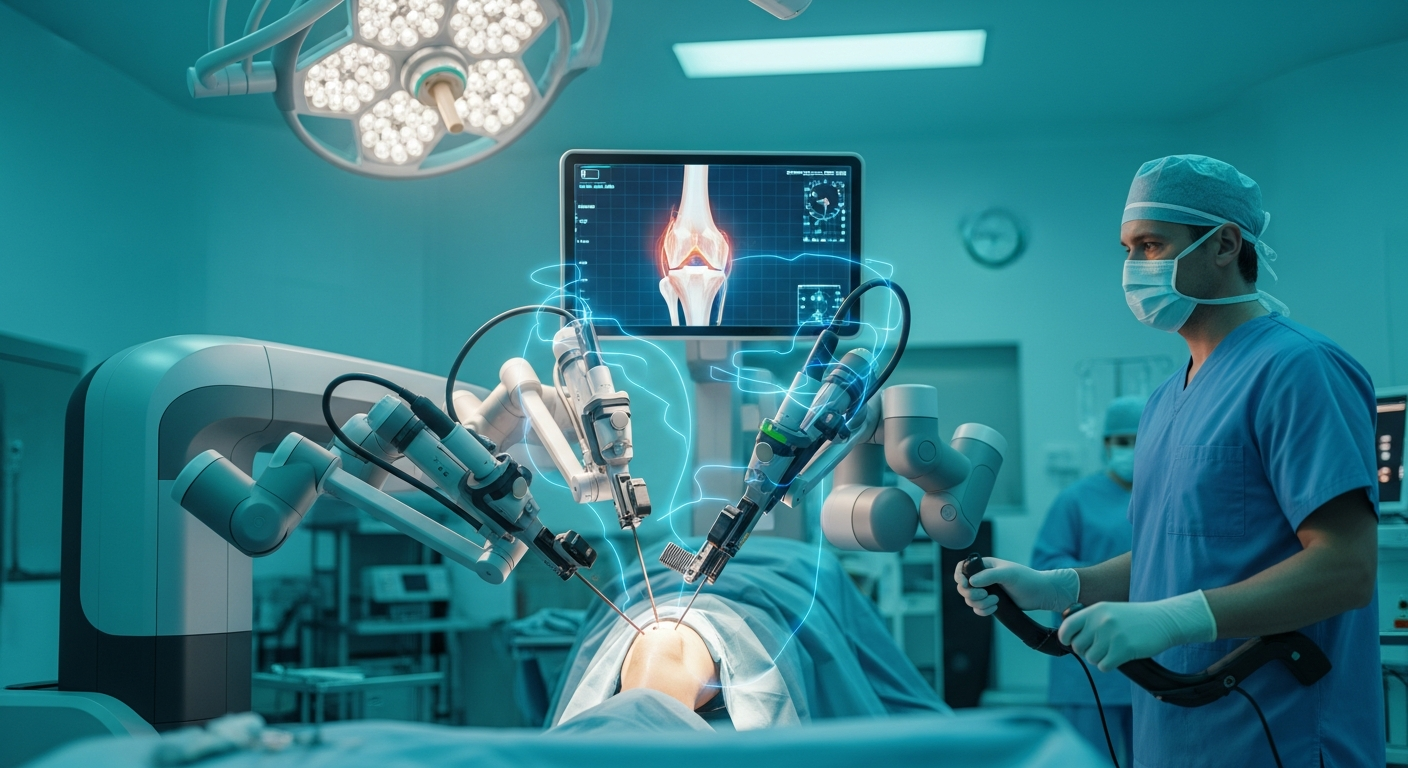
- Robotic surgery specifically reduces operative time and blood loss — the two main factors that increase risk in elderly patients
- At Nagpal Robotics, senior patients above 70 consistently achieve a 98% satisfaction rate alongside younger patients
- The risk of NOT having surgery — continued immobility, falls, dependency, depression — often outweighs the risk of surgery itself
Special Considerations for Senior Knee Replacement Patients
Cardiac Health
Elderly patients are more likely to have heart disease. Dr. Nagpal's pre-operative protocol includes a thorough cardiac evaluation — ECG, echocardiogram, and cardiologist clearance where needed. Robotic surgery's shorter operative time reduces cardiac stress during the procedure.
Blood Pressure Management
Hypertension is managed carefully before and during surgery. Blood pressure medications are adjusted and continued safely around the operative period.
Diabetes in Elderly Patients
Diabetes is particularly common in Punjab's elderly population. Dr. Nagpal's team works with endocrinologists to achieve optimal blood sugar control before surgery, reducing infection and healing risk.
Bone Quality (Osteoporosis)
Many elderly patients — particularly women — have reduced bone density (osteoporosis). Dr. Nagpal assesses bone quality and may recommend pre-operative bone-strengthening treatment. Implant fixation techniques are adapted for osteoporotic bone when needed.
Anaesthesia Safety
Spinal anaesthesia — preferred at Nagpal Robotics — is generally safer than general anaesthesia for elderly patients with cardiac or respiratory concerns. The anaesthesia team at Nagpal Robotics is experienced in managing complex elderly patients.
Benefits of Knee Replacement for Senior Citizens
For senior citizens with advanced knee arthritis, knee replacement offers transformative benefits:
- Pain Freedom: Complete elimination of the chronic knee pain that has been restricting life
- Restored Mobility: Walking, climbing stairs, and daily activities without assistance
- Reduced Fall Risk: A stable, pain-free knee dramatically reduces the risk of dangerous falls that commonly cause hip fractures in the elderly
- Independence: Regaining the ability to manage daily activities without depending on family caregivers
- Mental Wellbeing: Freedom from chronic pain profoundly improves mood, sleep quality, and overall mental health
- Social Reconnection: Ability to participate in family gatherings, religious events, and social activities
- Long-lasting Results: Modern implants last 20+ years — for patients above 70, typically for the rest of their lives
Post-Operative Care for Senior Patients at Nagpal Robotics
- Close monitoring of vital signs, blood sugar, blood pressure, and cardiac function during hospital stay
- Physiotherapy beginning within 24 hours — adapted to the patient's pace and capacity
- Pain management specifically tailored for elderly patients — minimising opiate use which can cause confusion in seniors
- DVT (blood clot) prevention with compression stockings and blood-thinning medications
- Wound care and infection monitoring throughout hospital stay and follow-up
- Home care guidance for families — what to watch for and how to support recovery at home
Senior Citizen with Knee Pain? We Can Help.
Consult Dr. Parampreet Singh Nagpal at Nagpal Robotics, Bathinda — expert robotic knee replacement for elderly patients across Punjab.
Call: +91 98551-63355 Book AppointmentFrequently Asked Questions
Can senior citizens above 70 have knee replacement surgery?
Yes. With proper medical evaluation and robotic technique at Nagpal Robotics, senior citizens above 70 can safely have knee replacement with excellent results. Age alone is not a contraindication.
What special precautions are taken for elderly knee replacement patients?
Thorough cardiac and pulmonary assessment, blood sugar optimisation, minimised surgery time via robotics, careful anaesthesia selection, and close post-operative monitoring.
Is robotic knee replacement safer for elderly patients?
Yes. Robotic surgery reduces operative time, blood loss, and tissue damage — key factors that reduce risk for elderly patients with potential cardiac or other comorbidities.