-
 +91 98551-63355
 - nagpaljointclinic@gmail.com
+91 98551-63355


.png)


Dr. Parampreet Singh Nagpal is Northern India's first joint surgeon who operate with 2 different joint robots under one roof. One is Cuvis by Maxx Meril(Punjab’s first fully Active Joint Robot) and another one is Cori by Smit & Nephew(Semi Active Joint Robot). Now patients have 6 different implant options to choose from with 2 Robots. Nagpal Hospital's hardworking Orthopedic team has done more than 13000 successful Joint Surgeries.
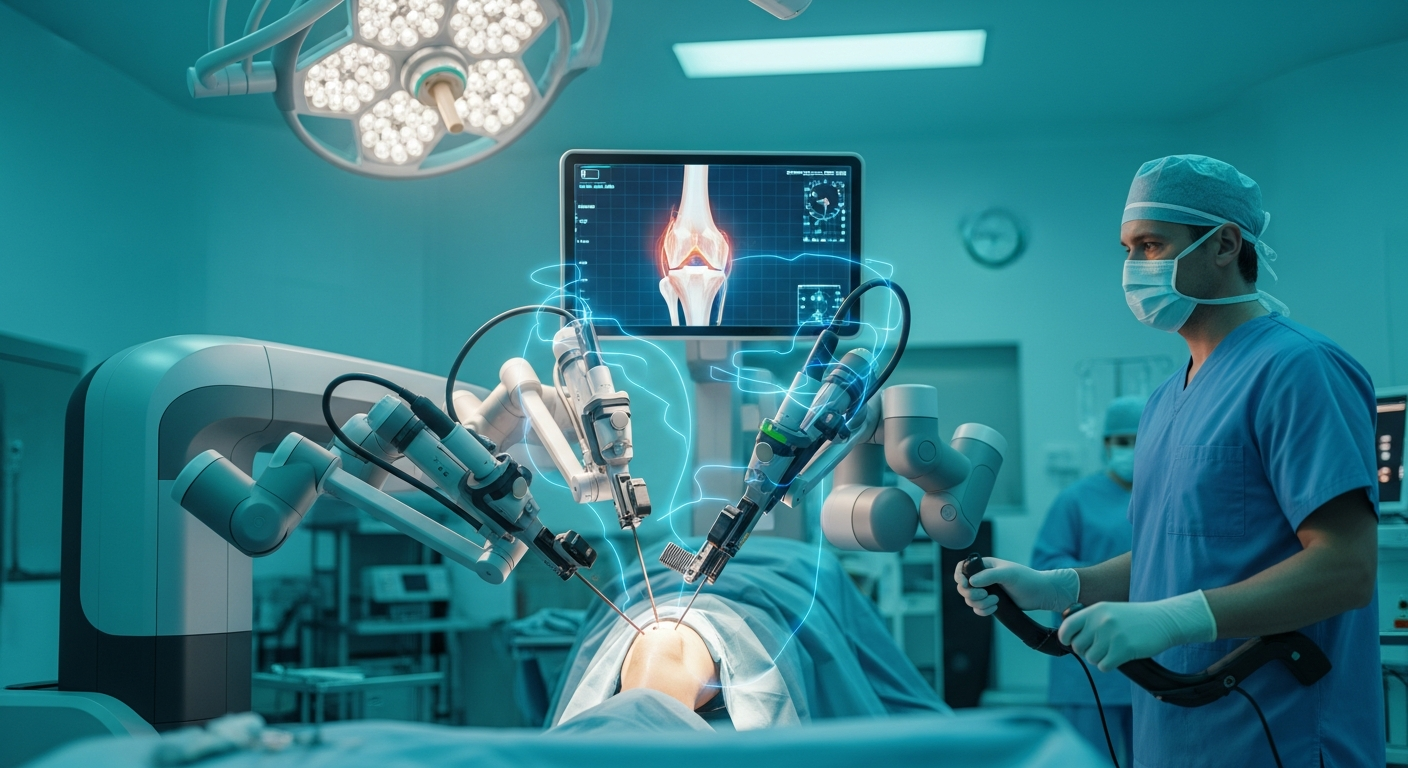
One of the most practical questions patients ask Dr. Parampreet Singh Nagpal at Nagpal Robotics is: "Doctor, how long will the whole thing take — the surgery, the hospital stay, and when will I be back on my feet?" It's a completely reasonable question, especially when you have family obligations, work responsibilities, or are travelling from another city for surgery.
In this article, we break down the complete timeline — from the day you're admitted to Nagpal Robotics Bathinda all the way through your full recovery — so you know exactly what to expect.
Robotic-assisted knee replacement surgery at Nagpal Robotics typically takes 60 to 90 minutes for a single knee. For bilateral knee replacement (both knees at once), the total operating time is approximately 2 to 2.5 hours.
You may wonder why robotic surgery is sometimes slightly longer than conventional surgery — the reason is the additional setup time for the robotic system and the real-time planning verification step. However, the precision gained in those extra minutes results in dramatically better long-term outcomes.
Recovery timelines vary between patients based on:
Robotic-assisted surgery at Nagpal Robotics produces measurably faster recovery compared to conventional techniques because:
Studies show robotic knee replacement patients achieve functional milestones approximately 2–3 weeks faster than conventional surgery patients.
Bilateral knee replacement (both knees in one surgery) takes approximately 2–2.5 hours. Hospital stay is slightly longer — typically 5–7 days. Recovery takes somewhat longer (approximately 4–5 months for full recovery) but saves the patient one complete surgery, one anaesthesia, and one full recovery period. Dr. Nagpal recommends bilateral replacement for suitable patients who want the most efficient path to complete mobility restoration.
Q: I'm coming from Ludhiana for surgery — how many days should I plan to stay in Bathinda?
A: Plan for 5–7 days minimum in Bathinda (admission + surgery + hospital stay + 1–2 days before travel). Short-distance patients (2–3 hours away) can often travel home 3–4 days after surgery. We recommend your first follow-up is done at Nagpal Robotics before travelling far.
Q: When can I travel by train or bus after knee replacement?
A: Short trips (2–3 hours) are possible after 3–4 weeks. Longer travel by train (preferred over bus for comfort) is generally safe after 6 weeks. Dr. Nagpal's team will give personalised travel advice at your 6-week follow-up.
Q: When can I go back to work after knee replacement?
A: Desk work: 4–6 weeks. Teaching/standing work: 8–10 weeks. Physical/labour work: 3–6 months (may vary). Agricultural work: discussed case-by-case.
Dr. Parampreet Singh Nagpal – 3000+ successful surgeries, 98% satisfaction, Punjab's most advanced robotic knee centre.
Book Consultation +91 98551-63355Powered by Nagpal Robotics @2026
Created With ❤️ By Digital Dots