 +91 98551-63355


.png)








Searching for a knee replacement surgeon in Bathinda often begins when pain interferes with walking, sleep, work or family routines. Online information can help you prepare, but it cannot show whether your particular knee needs an operation. A clinician must consider your symptoms, examination, images, health and preferences together. You may also seek another opinion if you want more clarity. A good discussion should leave you with a realistic understanding of both what surgery may address and what it cannot promise.
What a knee replacement surgeon does
A knee replacement surgeon is an orthopaedic specialist who evaluates painful or damaged knee joints and, when appropriate, performs an operation that replaces worn joint surfaces with implant components. The operation may be total or partial depending on the pattern of disease and the condition of the remaining structures. The surgeon also helps plan medical preparation, explains procedural choices, coordinates with the anaesthesia and rehabilitation teams, and reviews progress after discharge. The decision is not based on an X-ray alone: an image is one part of the clinical picture.
Who may be evaluated for replacement
An evaluation may be useful when knee pain or stiffness keeps returning, everyday movement is becoming difficult, or previous treatment has not provided enough relief. Osteoarthritis is a common reason, but other conditions or an old injury may also affect the joint. Age alone does not decide suitability. A surgeon considers the severity and distribution of joint damage, strength and movement, general health, other medicines, the person's support at home, and what outcome they hope to achieve. Some people with striking X-rays have manageable symptoms; others have substantial difficulty with less obvious imaging findings.
Clinic profile
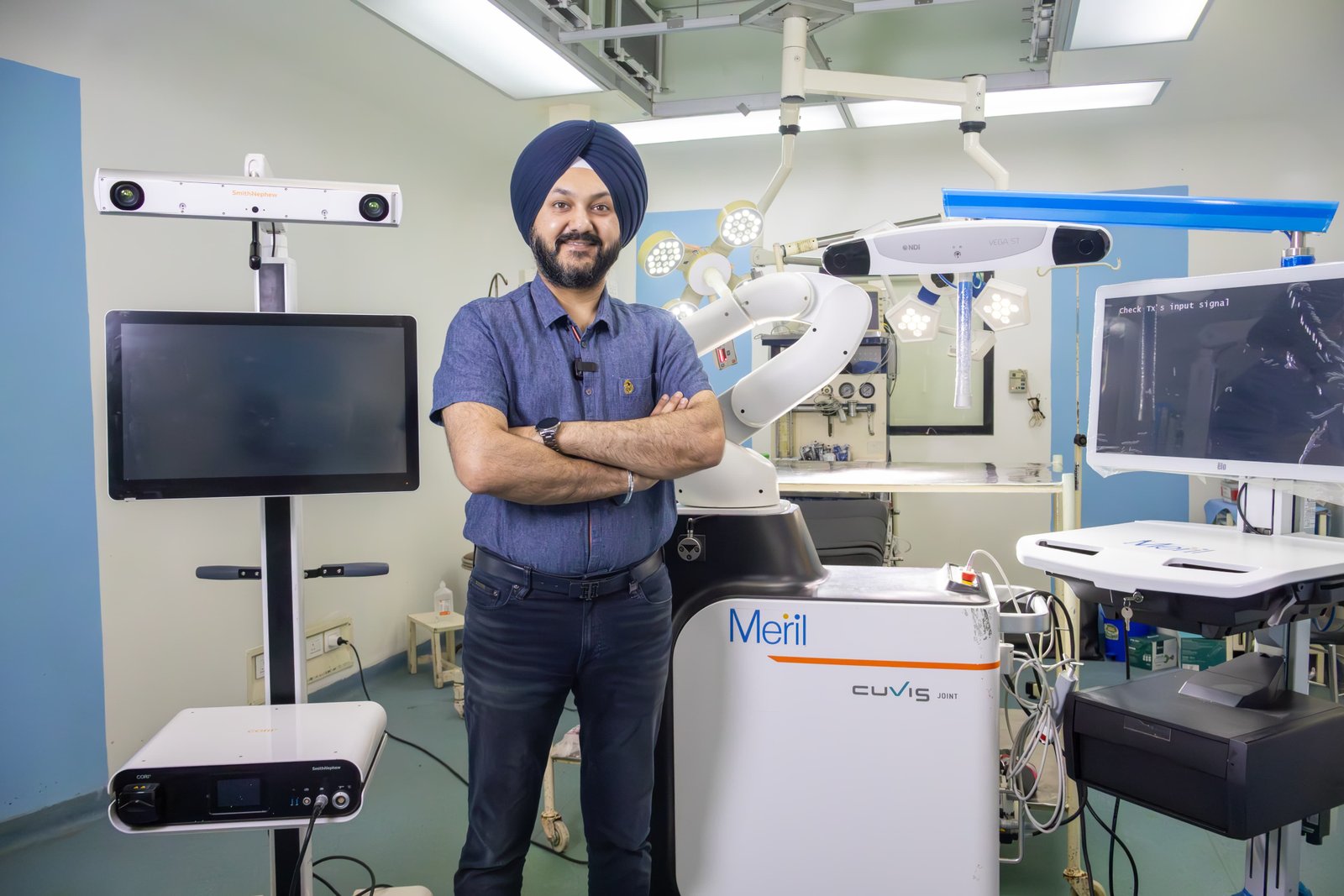
Dr. P.S. Nagpal is listed by the clinic as M.S (ORTHO), M.Ch. (USA), P.M.C. 36918 and Robotic Knee Replacement Surgeon. The clinic reports 3,000+ robotic surgeries, 13,000+ joint surgeries and 15+ years' experience. These are clinic-reported profile figures; they have not been independently verified here and are not measures or guarantees of an individual outcome. Practice location: Nagpal Superspeciality Hospital, Mall Road, Bathinda 151001.
Options to discuss before deciding
Non-surgical care can be appropriate at different stages. A clinician may discuss guided exercise or physiotherapy to maintain movement and strengthen muscles; activity adjustments and pacing; a walking aid or brace when appropriate; and weight-management support if relevant to the individual. Pain medicines may be considered after reviewing other conditions, allergies and existing prescriptions. Do not start, stop or combine medicines based only on a webpage. Some people ask about injections. Their possible benefit, limitations, risks and suitability depend on the specific treatment and medical history, so request a balanced explanation rather than assuming an injection will prevent or delay surgery.
When symptoms remain limiting despite a suitable non-operative plan, and examination and imaging support joint-surface damage, replacement may become one option. It is reasonable to ask what alternatives remain, whether a partial replacement could be considered, and what features make one approach more suitable than another. A surgeon should explain uncertainty: pain can have more than one source, and a technically successful operation cannot guarantee a pain-free knee, a particular walking distance or return to every activity.
How to make the consultation useful
Bring any previous knee X-rays, scans, clinic notes, discharge records and a current list of medicines, including supplements. If older films are available, they may help show how the joint has changed over time. Note important medical conditions, prior operations, allergies and any history of blood clots or problems with anaesthesia. You do not need to arrange tests before the appointment unless the clinic asks you to do so. Tell the team if you have difficulty hearing, understanding medical terms or travelling, so they can plan communication and access.
Tests and how the decision is made
The assessment commonly starts with a conversation and physical examination. The clinician may observe how you stand or walk, check knee movement and stability, and examine nearby joints. Weight-bearing X-rays are often used to assess joint spaces and alignment. Further imaging or blood tests are ordered when a specific question needs answering; not everyone needs every test. Tell the team about pregnancy possibility, kidney problems, allergies or implanted devices before imaging or investigations. The treating clinician should explain why a test is proposed and how its result could change the plan.
Before recommending an operation, the surgeon considers the pattern of symptoms, examination findings, imaging and the response to prior care. Health conditions such as diabetes, heart or lung disease, anaemia, skin problems or infection can affect preparation and timing. Medicines that affect bleeding or immune response may need a plan, but changes must be guided by the prescribing and surgical teams. Smoking, nutrition, mobility and home support may also be discussed. These conversations are not a test you have to pass; they help the care team make treatment safer and more practical.
Planning surgery and understanding technology
If replacement is chosen after shared discussion, the surgeon explains the proposed type, implant considerations, planned approach and why it fits your anatomy and goals. Total replacement treats more than one joint surface; partial replacement may be considered only when damage is limited and other structures meet clinical requirements. The final choice depends on evaluation, not an advertisement or a single technology label. Ask what the plan would be if findings during surgery differ from expectations, and whether the procedure could need to change.
Anesthesia, risks and informed consent
An anaesthesia clinician reviews your health, medicines, prior reactions and preferences, then explains suitable anaesthesia and pain-control options. Depending on individual circumstances, general or regional techniques may be discussed, sometimes alongside other methods. Ask how fasting instructions will be provided, what to do with regular medicines, and how nausea or pain may be managed. Never stop a prescribed medicine without instructions. Share herbal products, tobacco or alcohol use and any previous difficult airway or anaesthesia experience honestly; these details help the team plan.
Every operation has risks. For knee replacement, questions may include infection, bleeding, blood clots, stiffness, ongoing pain, wound-healing problems, nerve or blood-vessel injury, implant-related problems, anaesthesia complications and the possibility of further treatment. The likelihood and seriousness vary with a person's health and procedure. Ask which risks are more relevant to you, what measures are used to reduce them, which warning signs need urgent attention, and whom to call after discharge. Consent should follow a conversation in which benefits, alternatives and uncertainties are understandable.
Hospital stay and the first days
Length of stay is variable; it is not possible to promise a fixed number of nights for everyone. The care team considers pain control, safe transfers and walking, wound and medical checks, medicines, home support and local discharge arrangements. Some patients need additional monitoring or rehabilitation. Ask what milestones matter for discharge, whether a caregiver should be present, and what equipment might be useful at home. The team should give instructions about wound care, bathing, medicines, movement and follow-up before you leave.
Early movement is generally introduced under professional guidance when the team considers it appropriate. A physiotherapist may help you practise transfers and walking with an aid, and show exercises matched to your operation and health. Follow your own instructions rather than comparing progress with another patient. Pain, swelling, fatigue and sleep disruption can fluctuate. Contact the treating team if symptoms worry you; urgent signs and contact routes should be explained before discharge. A family member can help keep appointments and medication instructions organised.
Rehabilitation, follow-up and realistic expectations
Rehabilitation is part of the treatment, not an optional extra. Exercises are adjusted over time to build movement, strength, balance and confidence. The schedule and pace vary according to the operation, fitness, pain, other illnesses and access to physiotherapy. A surgeon or therapist can explain which movements are encouraged, which activities should be limited temporarily and how to progress safely. Do not force an exercise that causes sharp pain or ignore new symptoms; ask the treating team for advice. A written home plan makes it easier for caregivers to support the same goals.
Follow-up visits let the clinician review the wound, movement, pain, medicines and rehabilitation, and decide whether imaging or other checks are needed. Keep these appointments even if you feel well, and bring questions or concerns. Recovery is gradual and differs from person to person; improvements may not happen in a straight line. The aim is to improve function and reduce symptoms where possible, while acknowledging that stiffness, numbness, discomfort or limitations can remain. No surgeon or device can guarantee a specific result, time to recovery or implant lifespan for an individual.
Cost, insurance and practical planning
There is no single meaningful price that applies to every knee replacement. The estimate can vary with the type of operation, implant choices, technology, medical needs, hospital stay and medicines or rehabilitation included. Ask for a written estimate and a clear list of what it covers, what may be billed separately and what could change the total. Ask how a longer stay or additional tests are handled. Do not rely on a verbal package figure without confirming its scope. The clinic can explain its current billing process; this page does not state a price.
If you plan to use insurance or employer coverage, contact the insurer before scheduling. Ask whether the hospital and surgeon are in network, whether pre-authorisation is required, what documents are needed and what exclusions or co-payments may apply. Request the clinic's estimate and medical documents promptly, but remember that coverage decisions belong to the insurer. Families travelling from outside Bathinda should ask about appointment timing, likely visits, nearby accommodation and how soon a return journey is appropriate after an operation. Do not book non-refundable travel until the clinical team confirms a plan.
Appointments in Bathinda
Nagpal Superspeciality Hospital is at Mall Road, Bathinda 151001. To ask about an appointment or directions, call +91 98551 63355 or +91 98555 63355, or use the contact and appointment page. Please confirm clinic availability and bring relevant reports. If travelling with a family member, consider bringing the person who will assist at home, especially when discussing surgery planning. You can also read the general knee replacement guide and the surgery pathway guide before your visit.
Frequently asked questions
How do I choose a knee replacement surgeon in Bathinda?
Ask about relevant orthopaedic training and experience, the proposed operation, alternatives, individual risks, rehabilitation and follow-up. Consider whether the surgeon listens and explains uncertainty clearly. The decision should be based on your clinical evaluation and priorities, not ranking claims.
Does a consultation mean I have to agree to surgery?
No. A consultation is an opportunity to understand the diagnosis and options. You can discuss non-surgical care, request time to think or seek another opinion. Surgery should be considered through an informed conversation, not assumed from an appointment.
What should I bring?
Bring available knee images and reports, a medication list, relevant medical records and a written summary of symptoms and questions. Do not delay an appointment if you cannot locate every old report; the clinic can tell you what is needed.
Are robotic techniques suitable for everyone?
No single technique is suitable for every knee. Ask what a robotic system would contribute in your specific case, what its limitations are and whether a conventional approach may also be considered. Your surgeon can explain after reviewing your anatomy and health.
How long is the hospital stay?
It varies with the procedure, health, recovery milestones and home support. The team can explain the likely plan after evaluation, but the actual discharge date may change if more monitoring or support is needed.
Start with a conversation, not an assumption.
Ask about your options and what an individual assessment involves.
Call the clinicAppointment and contact details